


Singapore
The main hub in our trip in the region.
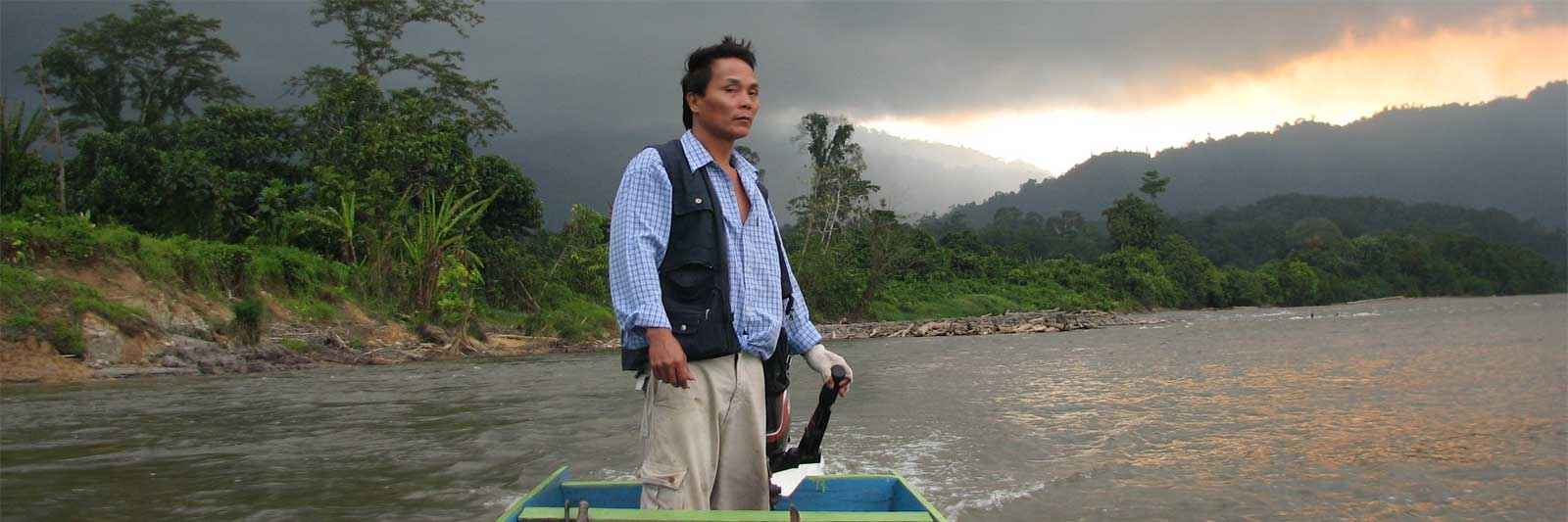
The first 5 weeks of our first visit to SE Asia were spent in M'sia.
M'sia gained independence from the British in 1957, has a population of about 26 million, and is a melting pot of ethnicity, including indigenous peoples (over 50+ tribes speaking different languages, particularly in Borneo), Malay, Chinese, Nonnya (mixed Chinese-Malay decent), and Indian, all of which contribute to a vibrant community feeling.
M'sia has a goal to be a 'developed' country before 2020. This includes:
Transport is semi-organized, semi-unorganized. We still managed to find buses leaving to most places with a more regular occurrences than you'd find in NZ. There are however more touts and your taxi driver will take a cut for your delivery to a particular bus counter at the bus station. Taxi fares are still comparatively inexpensive, as is the price of fuel in coastal areas.
While the NZ exchange rate is about $2.3NZD to the Malay Ringgit (RM), your purchasing is much improved on many things such as food and accommodation. For example:
We're pleased to have got out of expensive Singapore. I'd be getting a wriggle on if you want to go here though - M'sia seems to have cottoned on to the 'tourists have money and will pay comparatively exorbitant prices' concept promoted in S'pore (a permit to climb G. Kinabalu costs 100RM for a tourist, 20RM for a Malay, and a hostel bed costs 42RM compared with 15RM in the cities). The difference between S'pore and M'sia is that if it looks good in M'sia, it's probably broken - you may not get what you pay for. There are of course some exceptions, in particular, the great hostels we've stayed in. The prize so far goes to Highlands Lodge (Miri, Sarawak). We also loved our stay at Nora Chalet, Salang, Pilau Tioman.
All-up, the scenery, friendly locals, scrummy food and the relative ease of travel makes M'sia a friendly and reasonably inexpensive first port of call in Asia.
Johor is the southernmost state of Peninsular Malaysia, and the only land-based border crossing with Singapore.
When you cross the border, remember that your ticket gets you all the way to the long-distance station - don't get conned into a taxi ride you don't need.
Expect some changes if you are coming from Singapore - there isn't one central ticketing agency - there are a tonne who all want your business - but that's what happens when things are sooo cheap - a 3hr bus ride will cost RM10 - about NZD4 (USD 3). But don't expect it to run on time. There are a lot of signs up and about trying to advertise Johor as a place to visit - the shopping is more spacious and cheaper here - but be careful trying your Malay on strangers - many people are from across the causeway in S'pore. There are also many new mid-range hotels here that are much better value that S'pore - about NZD35 compared to NZD 65 for similar quality (USD 20-40), but you trade that with a less reliable bus service.
Off the east coast of Johor is Pilau Tioman and surrounding islands - same deal goes for boats to the islands as does for buses - lots of touts. At the North end of Tioman is Salang - where the locals go and therefore less resort style - and there's plenty of budget accommodation that you won't find in the Lonely Planet so long as you're prepared to go without air con. Don't expect much opportunity to practice your Malay here, locals find it easier to speak English than decipher your Malay! Of course, hello and thank you will keep things in good spirits.
Tioman is just such a fantastic place to be lazzzzzy - snorkel, swim, dive or go for a jungle walk, you'll dwindle the hours away so quickly here. Remember to take cash as there's no ATM (just don't be too flashy with it - remember the average wage in Malaysia is much lower than western wages). A 1/2 day island hop trip is RM50, a ferry to Tekek RM20 (one way) and multi-dive trips go for 700RM upwards. Most of all relax, and enjoy the friendly company!
28 July, 2006
We managed to make our way to Mersing and then on to Pilau Tioman - the bus station was interesting with hawkers for different bus companies - we managed to get on a bus with an elder gent that spoke no English - combined with our very very very basic Malay it made for a really fun bus ride.
30 July, 2006
Had 6 days in Tioman. Pilau Tioman was awesome - Salang is just so laid back it's not funny. And cheap! We managed on $30NZ/day all up which is great eating amazing 2-course Malay dinners every day. My tummy is the best it's been for years!!! Snorkelling was amazing swimming twice a day - the temperature was about 35 during the day and about 28 at night - fantastic! Went for a 2hr jungle walk and sweated a swimming pool like the stupid white-people we are (orangputih is slang for tourist). Went for a swim and then went back - but it had rained and soft mud sucks with jandals - Alan had to literally push me back up the track!
We missed our outer island snorkel trip yesterday because a storm blew in - talk about cold we had to put wool jumpers and polar fleeces on. Unfortunately Chris also missed my Roti Kanai cooking lesson. It warmed up by evening and we were treated to coconut juice freshly collected by the person running our chalet - a really sweet older lady.
Saw a fair bit of wildlife on the island (aside from about 50 species of fish and 10 or so colours of coral and clams) - monkeys, butterflies. Monitor lizards, other bugs etc. Spent quite a bit of time practicing Malay - the grammar is dead simple and we can string some scentences together now so we can be understood - no chance of understanding the locals though - they speak as fast as the South Americans! Chris nearly finished the "Learn Malay in 3 weeks" book. The only problem with speaking Malay is that everyone speaks back in English, and never in bloody Malay! That includes the kids aged 5!
6 August, 2006
Sawawak, Borneo; home of some of the richest remaining wildlife of the planet.
Our limited time for Sarawak saw us hit a few key places and hit them hard.
We spent 3 weeks in Sarawak, flying Air Asia from Johor Baru on the peninsula. Our original plans included many many national parks. However, a lack of public transport, a lack of anti-venom for tour packages, and Chris's dislike of bus-tour touts meant that we didn't make it to Kubah. Alas, the cities are far more enjoyable that the equivalent in NZ. We based ourselves in two key hubs: Kuching and Miri and took a 16hr bus ride in between.
Kuching, the capital is a fantastic little city of 0.5 million people - a pretty main river, park, museum, vibrant markets and stores, and really well priced food, from the all-you can eat self-cook Chinese thingie (note: not a good idea to be sitting next to a table-top BBQ if you're just coping with the heat). As a white-skinned female, and a tall-western female, you'll endure stares from just about everyone from kids to public service anywhere in Sarawak (except the highlands). Whilst the taxi and bus drivers are always out to cut you a less-fantastic deal, people are friendly the best way to break the language and cultural barrier is to share something as simple as a smile.
On the whole, Sarawak is a place of contrasts - poorer rural community-oriented kampungs and longhouses vs. growing cities with apartment blocks and share-houses, the full range of municipal services and all they might want (but not need) from the west (excepting good coffee houses). Historically, it was separate from peninsula M'sia and it still sees itself this way with separate customs procedures and a desire for separate high court proceedings. Culturally, it's exceptionally diverse - over 30 different groups of people with their own languages. M'sian government has had some effect on this - local languages are not allowed to be spoken in schools and Melayu (Malaysian) now dominates. You'll also see a mix of religious beliefs, including Hindi, Buddhist, Animist and Christianity (RC) which is dominant in some upriver areas, in addition to Muslim.
We loved travelling here - transport takes time in Sarawak, particularly in inland areas where there is sometimes no transport. So why not take your time? This is an area of the world where natural resources (oil, sugar palm plantations and oil) still drive the economy and is one where indigenous peoples are marginalized in large-scale decision making processes. It is definitely a place worth taking some time to explore.
Thanks to everyone who made our time as enjoyable as it was.
9 August, 2006
Our cab driver had a heavy foot, travelling 120 km/hr in a 50 km/hr zone. After near death in our cab on the way to the Johor Baru airport (he was going , that's instead of ) and filling out our second Malay customs card, we descended on the B&B hostel in Kuching. We spent a total of ...days in Kuching and surrounds. We enjoyed shopping at the markets, and eating in the city. Still new to M'sia, we were impressed with the efficiency of the two-person bus system (one person driving, one ticketing), the takeaway drinks in plastic bags with straws, and of course the markets - I'd love to live here just for the fresh produce - pineapples at 1RM (that's less than 0.5NZD!).
The museum gave us some insights into the similarities between the Maori and Orang Ulu (literally up-river peoples) cultures - no bead work in NZ, nor Hangi in Boreno though. Note we intentionally avoided the over-hyped and over-priced cultural village. All of our time in the city we have waves, horn honks, and glaring from the locals. Locals were really friendly though - we spent an afternoon swimming with students from UNIMASS at wind cave near the border with Kilimantan - a lot of fun. We also spent time in Bako National Park which has amazing wildlife (more on that later) but the management reminds you that this is still a developing country. The National parks are NOT run by the government, but by a private company who charge mega-bucks to stay there. Needless to say, at $107RM/night ($50NZD/$35USD) I was mightily unimpressed at no water to flush any of the loos. After some straight talking, a so called water shortage was fixed by morning and taps overfilling sinks left right and centre. The park staff nicknamed me no-water girl. I felt like I may has well have opened my wallet and told them to help themselves. Few Malays complain and as a result, its a get what you get, rather than a get what you think you're paying for system.
The wildlife here was cool - we saw 4 big-noses (Proboscis Monkeys), and swam in a stream. The tops of Bako park are more like a savannah with rhododendrons, grasses of sorts, and really big cicadas. Stunning! We also went to Kecil Bay and swam, then took a boat out around the sea stacks (well worth the ride). Oh, and the bearded pigs were way cool.
The 16hr bus ride to Miri is 40RM cheaper than the plane, and interesting. We passed truck drivers parked in the middle of the road asleep in their truck cabs. Unfortunately the on-board loo went straight onto road just like a sheep truck so not recommended for people experiencing loose bowel movements!
Take a look at the pictures from around Kuching - we just wish we took some from the city.
12 August, 2006
Bario is a rich place for the observing traveller. Unfortunately, our camera batteries went flat up there.
In any case, some pictures and reflections on our five days there follow...
The Kelabit highlands are not really jungle but more like the NZ west coast 30-40 years ago. Access is more limited though. The flight in is 45 mins and then you land on a new tar sealed plane strip and walk a dusty road 2 km to what is almost a town centre. It's cooler than coastal Sarawak (about 23°C), and the landscape is like the West Coast of New Zealand, or maybe east cape up north, except you have more rice paddies then sheep (yes, they do have sheep up there! and oxen). In addition to the world renowned rice, they also have amazing pineapples that taste soooooo good, and the equivalent of pikopiko is a really popular food. And the people are really warm and friendly.
The area consists of a main valley with about 4 villages, and another 9 or 10 villages within 2 days walk, plus the nomadic Penan people. Villages consist of the traditional longhouse (with 6-18 families) and more recently, separate smaller houses. Power is from generator or if you are lucky, solar panel, and it runs from 7-9.30 in the evening. There is piped water and a rubbish dump, but who knows with respect to the sewage. Roads are few, and the main family transport unit is the motor bike which takes up to 5 people, or a 4wd (normally tourist lodges). Nevertheless, people are well fed, healthy, fit and educated, incredibly smart (and well educated) and insightful. Many speak 3-plus languages. Aside from the lack of a dentist, they are healthier and (at least outwardly) happier than many in NZ - and certainly more active in the later years in life!!!. This is the area where the British Sarawarkian resistance to the Japanese during world war two began, and an ex-missionary outpost (hence all locals are Christian rather than Muslim or Chinese). Kelabit have their own language, and are a very distinct people in many ways. Meals are scrummy - rice or noodles, fruits and veges from the forest or garden, and wild meat - deer (although the numbers are declining), pork (wild boar), fish, or chicken.
So far, the highlands have avoided the roading plans of the government that has facilitated clearing of jungle for palm oil, timber and oil in other parts of Sarawak. There are however many threats to the traditional lifestyle.
Compulsory boarding school (in Bario and Miri) has taken children off their home lands in the formative years, and led to mass migration of people away from the traditional subsistence lifestyle and into the cities. This of course makes things more difficult for the older generation who want to stay in the highlands - there's more work to do.
Other threats are from Governmental (mis)management. The recent privatisation of a subsidised state airline service means a huge 4-10 fold hike in freight prices, which means financial gains from exports will be decreased - there's no plans to replace the freight plane that crashed a couple of years ago either. Everything enters the area via a combination of plane, 4WD, boat and foot. Fuel costs NZD 4 per litre - the same as a hawker-stall dinner for 2 in the cities. Illegal logging had encroached onto traditional lands, and the government has plans to build a road into the area (which will make transport costs cheaper, but bring drastic changes to lifestyles and livelihoods).
There's little government assistance here - unless you count the failed 6 000 000RM (that's 3Mill NZD) hydro scheme that never produced the power promised (i.e., it worked as well as locals expected), then cracked and flooded the valley. The war with Indonesia in the 1970's has also affected things with migration of Kelabit tribes from the border area to safety in the Bario Valley. The effect on local politics is evident in subtle ways - the rebuilding of the original valley longhouse closer to rice paddies, and it's renaming as Bario Asal is an indication of this. Aside from the occasional Malay military jaunt along the jungle tracks (sorry, 'Patrol' if you can call 5 guys with one rifle that - the police have more arms here), there seems to be an easing in the tension with Kilimantan.
So, Bario is an interesting place but I think tourism (in it's infancy) is a mixed blessing - it provides an alternative income source, but it has the potential to cause division within the community between those doing well from it, and those not. I expect it also has the potential to further erode culture as it itself becomes a 'tourist' attraction. The infancy means that there's little information, and the 'newness' of the industry means that locals aren't particularly geared up for different levels of expectations of tourists, which adds to the southeast Asian tourist anxiety, i.e., that they are potential targets for being ripped off. It's hard to let that go, and perhaps a little unfair to the locals that we automatically project that on them given how friendly they are.
I think if the proposed road comes, tourism will be mass-tourism which will ruin the nature of the community that attracts the tourists in the first place. Without tourists, the current urbanisation of the indigenous population will most likely continue, and the cultural sustainability is also likely to be questionable. This really is a time when the broader community needs to make a stand on how they want things to develop, but even then, they likely have little power in Malaysian government decisions regarding roads and resource utilisation. In case you were wondering, there is one national park (Pulong Tau) and a trans-boundary conservation initiative with Kilimantan, but there is apparently illegal logging, so it's questionable how much protection this brings. National park development has also sidelined local input, and doesn't appear to consider potential models of buffer zone management of allocation for livelihoods. Parks management is also by private companies here in Sarawak, which is potentially worse for livelihoods than disorganised local tourism.
Although the above observations made me feel a little awkward at times (and made us question the ethics of being a tourists), it was an amazing place to visit and one I will go back to.
Why not find out more about Bario from the horses' mouths?
The bareo project was set up in conjunction with UNIMAS in Kuching to help the Bario community sell itself. Visit them at bario.com
Alternatively, visit the Kelabit site (web archive) for Kelabits
18 August, 2006
Sarawak’s Gunung Mulu National Park is home to some of the most impressive cave systems in the world and is incredibly rich in wildlife.
27 August, 2006
Sabah, home of the majestic Mt Kinnabulla, on Borneo.
We only stayed in Sabah for a little while, so there's not that much to say really.
We failed in our attempts to get to Tenom (see the news section), but had a really amazing time in the hills around Mt. Kinabalu. We stayed 2 nights in a village called Bundu Tuhan 1st - we were lucky that two tour guides were also staying in the same house (a little cottage) and we got invited to go with some local Dusan people from the village to their house and ate and had drinks - a very funny evening with a mix of 4 languages - Dusan, Kadazan, English and Malay. It was good to get an opportunity to practice my Malay. We also tried some shots of a local drink called Banar - a mix of coconut milk which they soak some dried bark of a native tree in to ferment - about the same % alcohol as wine but really strong bitter flavour. We went for an 11 km walk in the park the day before we went up the Mtn. Gave some opportunity to acclimatise and condition the muscles. The forest is diptocarp - must be similar to NZ cos I saw lots of similar looking aspleniums, ferns and some things that looked like Kahekitia and psuedopanx.
Staying at Bundu Tuhan was amazing - the mountains and villages here in sabah are just beautiful - whole hillsides covered in terraced crops (home-style veges introduced by the missionaries), palm oil and virgin forest. The bus takes 2hrs to go just 90 km, so it's fairly windy and steep and the bottom of the mountain is about 1,800 m. Then the clouds roll in and you are surrounded by this thick fog that is just a little wet, but so thick you can't see too far - and you can look down on thunder and lightning that happens below you in the valleys. It really was quite an amazing experience. We just wish we had a hire car to explore them some more and that we hadn't left it till the end of our time here.
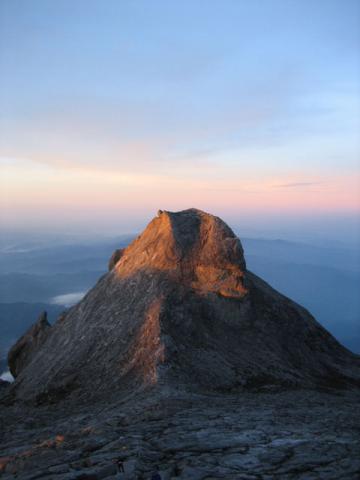
The international red group (we all had red coats) were a mix of us, 2 Germans and a Swede called Marcus . The walk itself went really well - we were up in 4hrs, 10mins which is apparently quite quick - went from 1,800 m to stop at about 3,200 m for the night. Lots of steps, but not as bad as I expected - similar steepness to but much easier than the walk in and out of Douboy Bay on Stewart Island but just twice as high! The huts were quite posh - kitchen with gas, lights, flush loos, and hot water shower. You got sheets and blankets too, and there was a separate restaurant - so you can tell the market that it's aimed at. They charge like a wounded bull up there - $23NZD for a night for a bed, $70NZD each for the climb, insurance and guide - that's expensive when our daily budget is $30NZD each, which is not too difficult to stick within!!! Then you can triple what you would pay in the city for food. The trip was really worth it the view from the hut alone is spectacular - another 700 m up over 2.5 km and you get to the top - most of it is pulling yourself up ropes - expect me and al just walked up it...they say altitude affects people but I think it's just that they are not used to exercising in the cold - we didn't find it too bad. Us and the Swede were the first to reach the summit in 1hr 55mins - average time is about 3. 45mins down. It really was very spectacular and I'd go again at the drop of a hat - just not today! down took 2hr 45mins - so fast. But they race the mountain in 2hrs 20min - or 3.20 for women - that's pretty sick!!!! The tops are just granite, and it's about 2 degrees (which is very different to 35!!!) but the sunrise is amazing, and then you get to see what you came up over (you leave at 2.30am from the hut!). The experience is really awesome.
Unfortunately, we stayed at the rather scuzzy pouring hot springs. An expensive disappointment, but we were lucky that the rafflesia was in flower nearby and so we got some good snaps of that. Back to our lodge in KK, then on to Kuala Lumpur.
If we were to do things again, I think a rental car would have been rather good - there are loads of unlisted guest houses everywhere here (the one we stayed in was great and also unlisted - it also had a kitchen! a major bonus when fresh produce just makes you want to cook). Otherwise, you feel like you are missing out on really getting and opportunity to soak up the atmosphere and explore all the little side roads and villages.
2 September, 2006
Selangor, home of the capital of Malaysia, Kuala Lumpur or KL.
We arrived in KL on the night of merdeka - the celebration of independence from the British (49 years this year). Our time in KL was a mixed one - it started messy, and got better.
We headed from the airport into KL Sentral - a bus/train station place thingie. After going to 2 different information counters to work out which train system to get on, we ate McDs (I know. disgusting and naughty), and worked it out ourselves (both were about to send us much further away). After a couple of wrong turns due to misprint in the map, we found our hostel. We got to our room, and I crashed. Al went into town. By the time he got back, we killed more than 15 bed bugs and asked to switch rooms. Great, until I asked al to pass my wallet in the morning and noticed the money was wet. My passport was OK, but Al's was saturated (the bag he was carrying it in had a blow-out) and ruined. We found another hotel (Petaling st, in the heart of Chinatown markets), and left the one we were in, but not before I had one of my fuse-blow outs at the shitty hostel (Trekker lodge, don't go there) when they wouldn't refund us the second night we had pre-paid. At least it made me feel better. From then on, we spent and extra 3 nights in KL, toing and froing between the Thai embassy and the NZ consulate trying to see if we could organize a new passport in Bangkok rather than in Malaysia. It did give us a chance to see KL.
KL is a real mixer of a city. Each ethnic group has its own part of town and seems to have maintained its traditional ethnic character, including a really expensive part for the loopies with wallets full of cash. China town and the markets were amazing, not to mention the tea pot shop and all the other shops. Little India was soooo colourful, with gorgeous Saris and so many beautiful burkas. We ended up with a box full of goodies to send home (including a tea set) and plenty of opportunity to practice haggling. The food was great too. In the end, we managed to negotiate all the various train systems. KL's good to visit, but the number of people was almost suffocating. Putrajaya bus station was really full on - when we got onto the right floor (there are 3 or four) and found the bus touts we were hustled straight onto a bus - but it took 30min more to arrive - some don't leave till they are completely full. I was just pleased to get out of the building (think 3 floors of a small car park building with one floor just empty buses and everywhere else swarms of people - about 10 000 all up).
On to Penang.
6 September 2006
Penang is a small state on the upper western coast of Peninsular Malaysia.
We only spent 3 days in Penang. The town is actually quite quaint and really worth a visit. It's one of few parts of Malaysia where the Chinese population is greater than the bamiputra (ethnic Malay). It also has strong Indian influence. Unfortunately, what this means is that there's no social security or assistance for building new businesses. As a consequence, its actually appears poorer than other parts of Malaysia, with many many homeless people living on the streets. There's also a fair amount resentment to current government policy that actively promotes opportunities for ethnic malays. Most people work a six day week, and a good chef will earn $1200 RM for that, of which 25% goes on accommodation. Of course, there's no tax in this income bracket. Purchasing power is actually quite good, until you look at air travel, or western commodities.
The food in Penang is as we were told. One of the highlights was a McDonalds style Indian chain-store fast-food joint. Amazing food - we wish they'd open in NZ. (see the Roti Chani video). There's also great Chinese food - we were finally acquainted with wonton mee - wontons, noodles and pork in a vegetable broth - yumeee! Very easy to get to the train station - just get on the free ferry and it takes you straight there.
From Butterworth, you can go straight to Bangkok (although you might now want to reconsider that). 2nd class is slight overkill - the seat spaces is at least 2-3X what you get in Malaysia, and the sleepers are really comfortable if the aircon doesn't freeze your pinkees first. The food's not bad either.
If you come overland, try the train. You might want to check on the security status in Hat Yai first though.
18 October, 2006
Some photos from our quick visit on the way back to Singapore.

©2024 Alan Davison and Christine Jacobson // Credit // Disclaimer